Two ways to fill the gap left by text
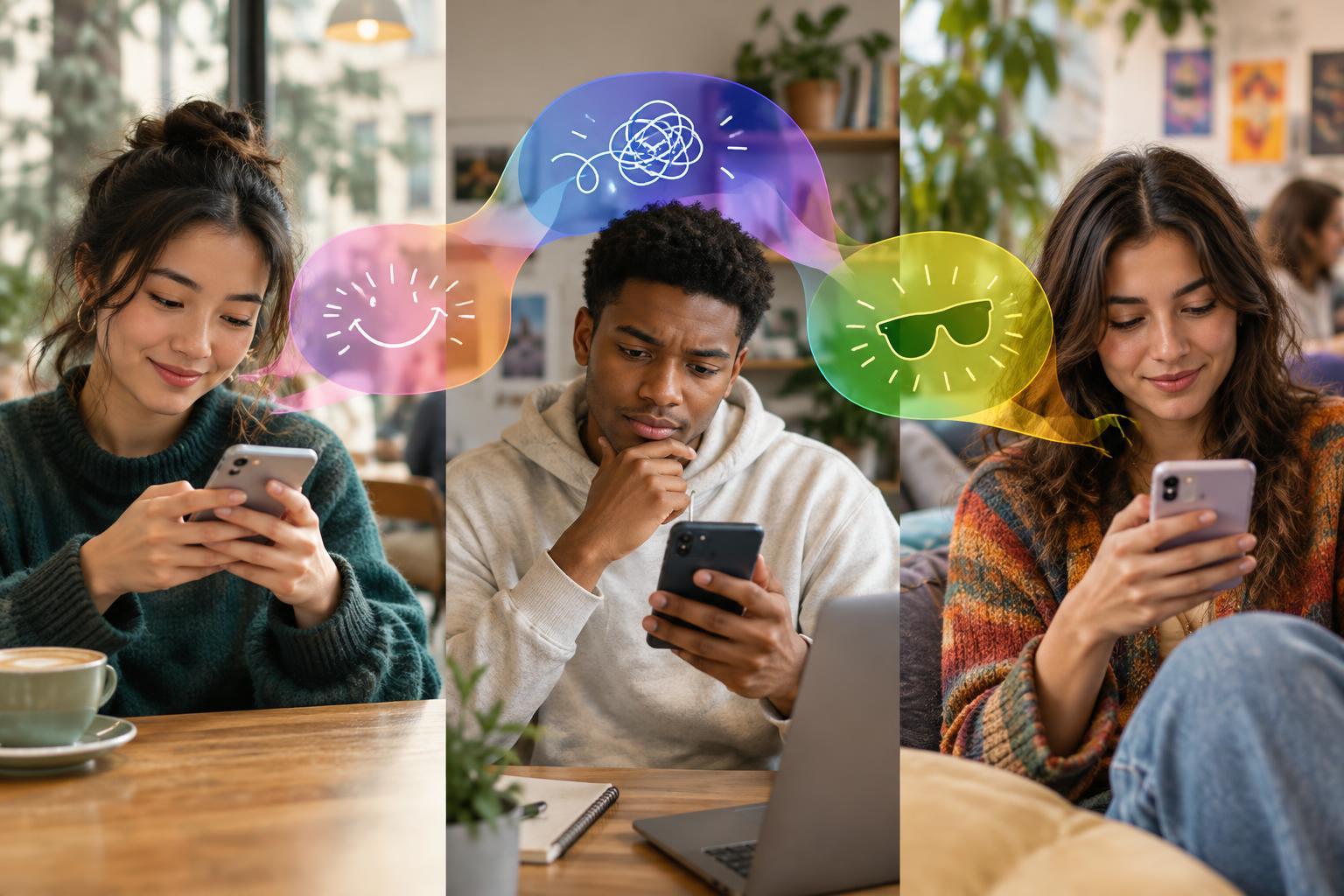
Text is quick, but it leaves out facial expression, timing and voice. “That’s great” might be enthusiastic, polite or sarcastic depending on the conversation. Emoji and reaction GIFs give people ways to suggest a tone that the words alone may not carry. Neither works like a precise translation of a feeling: readers still interpret the message through their relationship with the sender and what has already been said.
An emoji is a compact symbol that usually sits beside words or stands in for a brief response. A reaction GIF is a short moving image, often showing a person or character responding to a situation. Both can say “I’m amused,” but they ask different amounts of attention from the reader. The emoji adds a small cue; the GIF can briefly turn a response into a scene.
Emoji add a cue without taking over
Emoji are useful when the words should remain the center of the message. Compare “You finished it already?” with “You finished it already? 😄” The second version nudges the question toward delighted surprise rather than disbelief. A single symbol can soften a request, reinforce congratulations or show that a short reply is meant warmly.
Their brevity also makes emoji easy to use in fast-moving conversations. A thumbs-up can acknowledge a plan without starting a new exchange. A heart can show appreciation when someone shares a photo. But compactness brings ambiguity: the same thumbs-up might feel friendly to one person and abrupt to another, especially after a sensitive message. More emoji do not necessarily make a meaning clearer; sometimes they simply make the tone more emphatic.
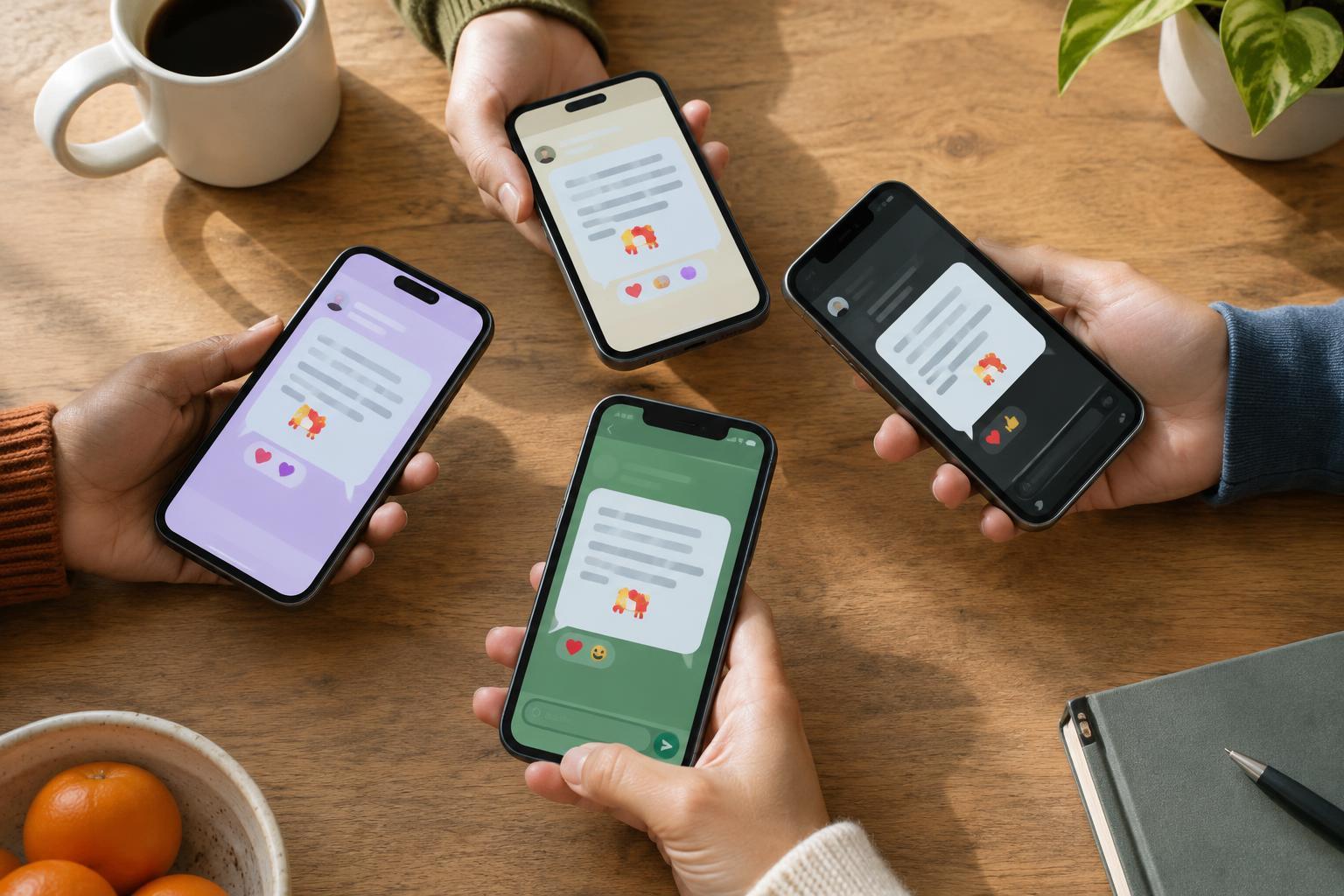
Presentation can vary across devices and platforms, and people develop their own habits around particular symbols. If a message matters, let the words carry the essential meaning. “I’m glad you told me, and I’m here to listen” is clearer than asking an emoji to do all the emotional work.
Reaction GIFs bring a performance into the chat
A reaction GIF offers more than a facial expression. A raised eyebrow, a pause before a smile or an exaggerated celebration can provide comic timing. Rather than merely labeling a feeling, a GIF can perform a response. That makes it especially effective when friends share a playful style of conversation or recognize the character and scene.
That extra personality can also change the subject. Replying to a small success with a dramatic standing ovation may feel like affectionate encouragement. Replying to someone’s frustrating day with a theatrical meltdown may seem as though the sender is making the moment about their own joke. A GIF borrowed from a film or show can carry associations beyond the expression visible in the clip; not everyone will recognize those associations, and those who do may read them differently.
GIFs also take up more space and time than emoji. Motion draws the eye, which can be welcome in a casual group chat but distracting in a practical exchange. Some people may not see an animation as intended, and its meaning can be hard to follow without accompanying text. When clarity matters, a short sentence can anchor the GIF: “That’s brilliant news” makes the celebratory intent unmistakable.
The relationship sets the tone
The best choice depends less on a universal rule than on the people involved. Close friends may understand that a particular GIF means “I know exactly what you mean.” In a conversation with someone new, that same clip might look mocking or confusing. Emoji can be just as personal: a symbol used as an inside joke will not necessarily communicate the same thing to an unfamiliar reader.
Pay attention to the weight of the moment, too. Playful exaggeration often fits a story about a minor inconvenience. It may feel out of place when someone is asking for help or sharing disappointment. In those moments, a direct response such as “That sounds difficult” gives the other person something firmer to rely on. An emoji can follow if it suits the relationship; a GIF is rarely a substitute for acknowledging what was said.
Group conversations add another layer. A reaction that delights one participant can interrupt another person’s serious point. Before sending, consider whether the image responds to the speaker or mainly entertains the audience watching the chat.
Choose the smallest signal that does the job
Start with the purpose of the reply. If you want to clarify that a sentence is friendly, an emoji may be enough. If you want to share in a joke and the recipient enjoys that style, a reaction GIF can make the exchange more expressive. If you need to apologize, offer support or explain a decision, use words first. Visual reactions work best as companions to meaning, not replacements for it.
It also helps to notice what the other person uses. Matching a conversation’s pace and style is often more considerate than reaching for the funniest possible response. When you are unsure how a reaction will land, choose the clearer, quieter option. Online tone is not something a symbol or clip can guarantee; it is something people build together, one message at a time.