Why leave a website to understand it?
When you land on an unfamiliar website, its About page seems like the natural place to start. It may explain the site’s mission, name its editors and describe its standards. That information is useful, but it is also self-description. A polished page can present a selective picture, just as a social media profile can. To judge whether a site deserves your trust on a particular claim, you need context the site does not control.
Lateral reading means opening other tabs to investigate a source instead of examining only the page in front of you. The goal is not to find a reason to reject an unfamiliar site. It is to answer practical questions: Who is behind it? What kind of work does it publish? Do independent sources describe it in the same way it describes itself? Most importantly, can you verify the specific information you came to read?
Start with the question that brought you there
Before searching, name the claim you are trying to evaluate. A site might publish a careful explainer in one section and a weakly supported opinion in another. Asking “Is this website trustworthy?” is often too broad; asking “What supports this article’s claim?” gives you something to investigate. Note the article’s author, publication name, date if one is shown, and any study, document, interview or dataset it cites.
This first pass should be brief. Design, spelling and an About page can offer clues, but none is a shortcut to verification. A professional-looking site can make unsupported claims, while a small community publication may report a firsthand experience accurately. Your initial task is to identify what would count as useful evidence, not to deliver an instant verdict based on appearance.
Investigate the publisher in other tabs
Search for the site’s name alongside the names of its owners, editors or parent organization, if listed. Look beyond the site’s own pages and social profiles. Independent reporting, organizational records or public work by named contributors may help you understand who produces the content and what interests they have. If several sites repeat the same biography, check whether they are independently describing the publisher or simply copying its press materials.
Pay attention to the identity of the site you actually opened. A familiar-sounding name or logo does not prove a connection to an established publication. Check the address carefully, especially when a page arrived through a repost, advertisement or message. Likewise, do not assume that an unfamiliar domain is suspicious by itself. The useful question is whether the site’s stated identity matches what you can establish elsewhere.
Trace claims instead of counting repetitions
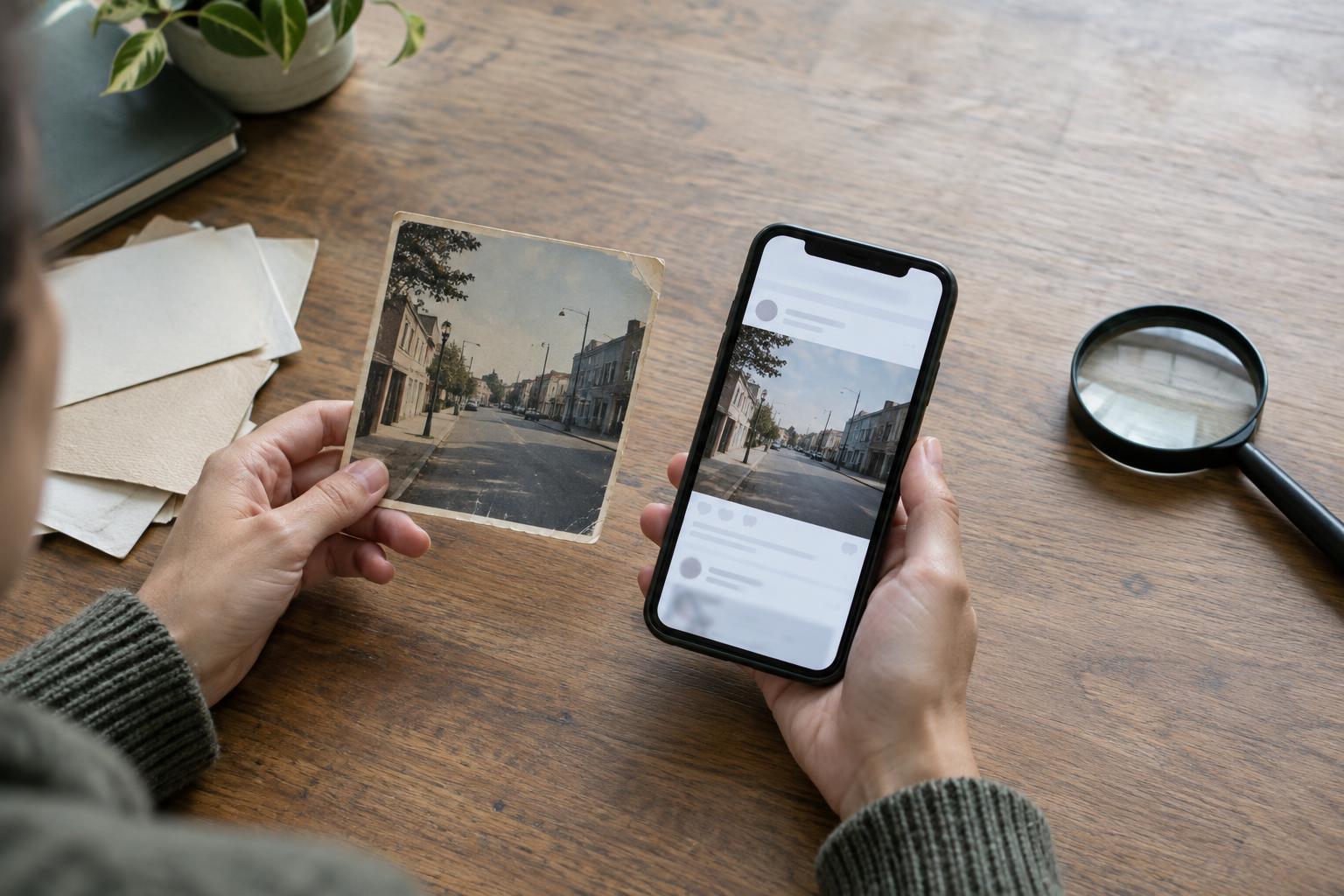
If an article cites a report, study or announcement, follow the reference when you can. Does the original material support the wording of the claim? An article may turn a narrow observation into a broad conclusion, omit a qualification or present an opinion as a finding. For a quoted statement, look for its original context. For an image, consider whether its caption establishes when and where it was made, rather than assuming it depicts the event under discussion.
Next, look for coverage or documentation that stands on its own. Five pages repeating the same claim are not five confirmations if they all rely on one unverified post. Independent accounts may disagree on interpretation while agreeing on basic facts; that distinction is worth noting. If you cannot reach the original material, say so in your own assessment. A broken link or missing citation does not automatically make a claim false, but it limits what you can confirm.
Make a proportionate judgment
You do not need an exhaustive investigation for every link you open. A casual recommendation may call for a quick identity check. A consequential claim you plan to share or rely on deserves more time: inspect the publisher, follow the evidence and seek independent confirmation. Pause if the article urges you to act immediately while making its underlying evidence hard to find.
Lateral reading often ends with a measured conclusion rather than a simple trustworthy-or-not label. You might find that the publisher is clearly identified but a particular claim remains unsupported, or that a useful firsthand account needs context from other sources. When sharing, preserve that distinction. Saying what you verified, what came from the site itself and what remains uncertain helps others make a better judgment too.