Start with the claim, not the timestamp
A post does not have to be fake to mislead. A real photo of a crowded station, for example, could be shared years later with a caption implying it shows a disruption happening today. The image may be authentic, while the claim about when it was taken is not. Before checking anything else, put the claim into words: What does the person sharing this want you to believe is happening now?
Look for language such as “just happened,” “right now” or “this week,” especially when the post itself offers no date. Sometimes the suggestion of freshness comes from the surrounding conversation rather than the caption. A reply saying “this is getting worse” can make an old screenshot feel like a new development. Separating the original material from what people are saying about it gives you a clearer question to investigate.
Trace the post back through the shares
A screenshot is usually a poor substitute for an original post. It can cut off a date, a reply that adds context or a link to the source. If you can, search for distinctive wording from the screenshot and open the original account or page. Check when it was posted, whether it was edited and whether it belongs to a longer thread. If the material reached you through several reposts, look for the earliest version you can find rather than assuming the most visible one came first.
Treat dates carefully. A repost may carry today’s timestamp even though the content inside it is old. Platforms can display dates differently depending on settings or location, and an edited page may show an update time rather than its original publication time. Read any available date alongside the post’s text and surrounding conversation. A current timestamp tells you when that version appeared; it does not, by itself, date the event it describes.
Check clues inside the content
Details in an image, video or text can help you test its timeline. Look for signs, place names, event titles, weather descriptions or references to people in particular roles. These clues are starting points, not proof: a sign may remain unchanged for years, and an old event might be discussed again for a legitimate reason. Your goal is to find a clue specific enough to check against another source.
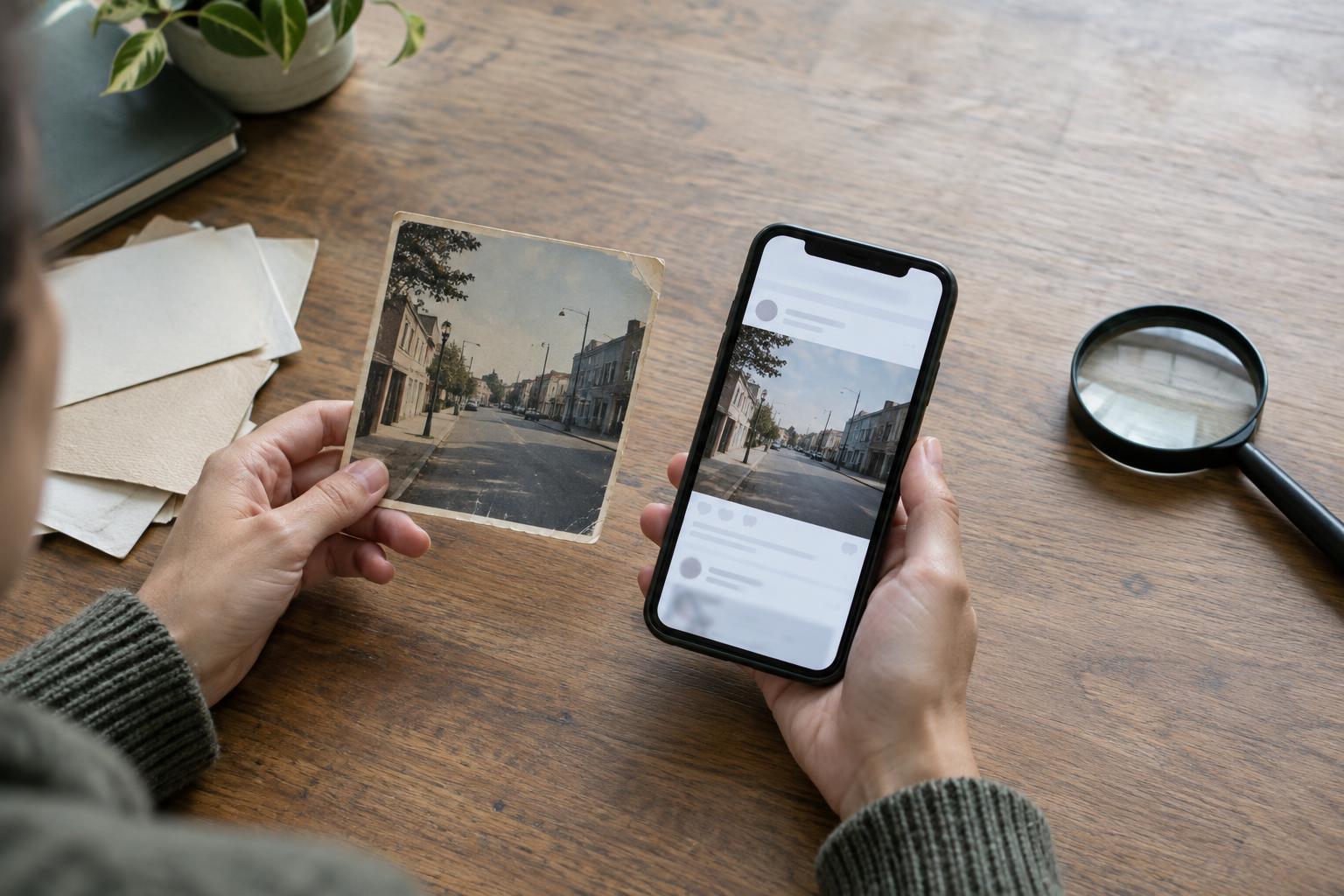
For an image, a reverse-image search may surface earlier appearances or a fuller, uncropped version. For a video, search for a distinctive phrase from its audio or caption, or use a clear frame as an image-search starting point. Results can be incomplete, so finding no older copy does not establish that the material is new. Conversely, an earlier match does not automatically prove deception; compare the match with the exact claim being made now.
Find the missing context
Once you locate an earlier appearance, read beyond its date. What was the post originally about, and does the new caption describe the same place, people and event? An old post might be shared accurately as a memory, an example of a recurring problem or background to a current discussion. The warning sign is a mismatch: content from one moment being used as apparent evidence for another.
If a linked article or page has changed, an archived copy may help you see how it previously appeared, though archives do not capture everything. Other posts from the original account can also clarify whether a screenshot came from a longer exchange. Give more weight to information you can inspect directly than to a chain of accounts repeating the same caption. Repetition can make a claim familiar without making its timeline reliable.
Share what you know, and name what you don’t
You may not be able to establish the exact date of every image or post. You can still make a useful distinction: “This screenshot was posted today” is different from “This event happened today.” If you find an older original, say what it shows and where the newer framing goes beyond it. If you cannot verify the timeline, avoid passing along a caption that presents the content as breaking news.
When correcting a post, link to the clearest original material available and explain the mismatch briefly. Avoid repeating a sensational caption without context, since readers may remember the claim more readily than the correction. A quick pause to check origin, date and meaning can prevent an authentic piece of content from becoming misleading in its next round of sharing.