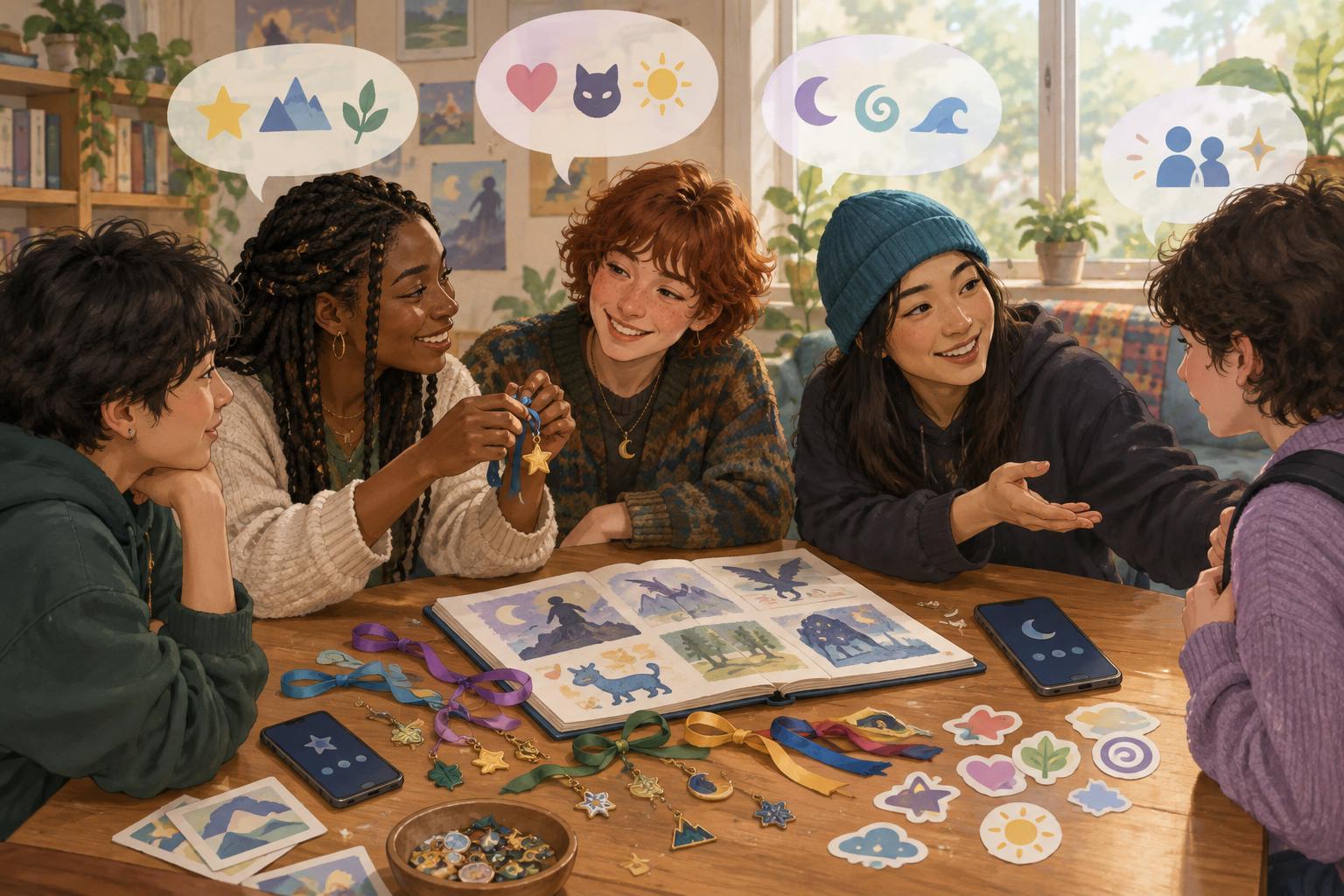
A shared interest needs a shared shorthand
A fandom may begin with a common interest in a story, artist, game or team, but talking about that interest takes work. People need ways to refer to recurring characters, favorite moments and familiar debates. A short nickname can replace a long explanation. A phrase from one conversation can become a quick way to say, “You know the moment I mean.” Over time, these shortcuts form a vocabulary that makes everyday discussion easier.
The words do more than save space. They carry a community’s interpretation of what matters. Two groups can follow the same work yet use different names for an event because they find different things memorable or funny. Fan language is therefore less like a fixed dictionary and more like a record of attention: it shows which details people keep returning to together.
Inside jokes become community memory
Many fan expressions start small. Someone notices an odd background detail, makes a playful comment, and others repeat it when the detail appears again. The phrase might outlast its original context. To someone arriving later, it may seem mysterious; to longtime participants, it recalls a chain of conversations. Repeating the joke is a way of remembering those conversations without retelling them each time.
Traditions can develop in the same way. Fans might revisit a favorite episode at a particular point in a rewatch, post their own versions of a familiar prompt, or greet a new release with a recurring question. These practices give people something to do together, even when they are participating from different places and at different times. The ritual is not necessarily important because it is old. It matters because people recognize it and choose to keep it going.
Platforms shape what catches on
The space where fans gather affects how their language travels. A group chat favors quick references that need little explanation. A discussion forum gives people room to develop detailed terms and arguments. A short video or image caption can attach a phrase to a repeatable format. When an expression moves between these spaces, it may change: a sincere description can become a joke, or a joke can become a useful label.
That movement also explains why a fandom rarely speaks with one voice. Different corners of a community may have their own customs, and the same term can mean slightly different things to different people. Treating fan vocabulary as universal can flatten those differences. If a reference is unfamiliar, its meaning may be local to one group rather than something every fan is expected to know.
Belonging has a learning curve
Recognizing a reference can feel welcoming. It offers a small moment of connection: someone else noticed the same thing and remembers it too. Using familiar language lets participants signal that they understand the conversation, while shared traditions create easy opportunities to contribute. A person does not need to invent a new idea every time they want to join in.
The same habits can make entry difficult. A newcomer who sees unexplained nicknames and repeated jokes may feel as if everyone else received a guide they missed. Sometimes that distance is accidental; people simply forget how much context they have accumulated. Sometimes members use obscure references to test who counts as a “real” fan. A community can preserve its distinctive language without turning every conversation into a test. Explaining a term when asked, or linking an idea back to its plain-language meaning, leaves room for more people.
Traditions stay alive by changing
Fan culture is often described through its most recognizable phrases, but its vocabulary is never complete. New participants notice different details, bring different senses of humor and adapt old formats to new conversations. A tradition may fade because it no longer feels useful, while another gains meaning as people add to it. That change is not necessarily a loss of authenticity; it is part of how a living community works.
The next time you encounter a fan phrase you do not understand, look at what people are doing with it. Are they naming a recurring pattern, sharing affection, making a criticism or inviting others to play along? Those questions reveal more than a definition alone. Fandoms develop words and rituals because sharing an interest is also a social activity. Their language gives people ways to remember, participate and make the interest their own.