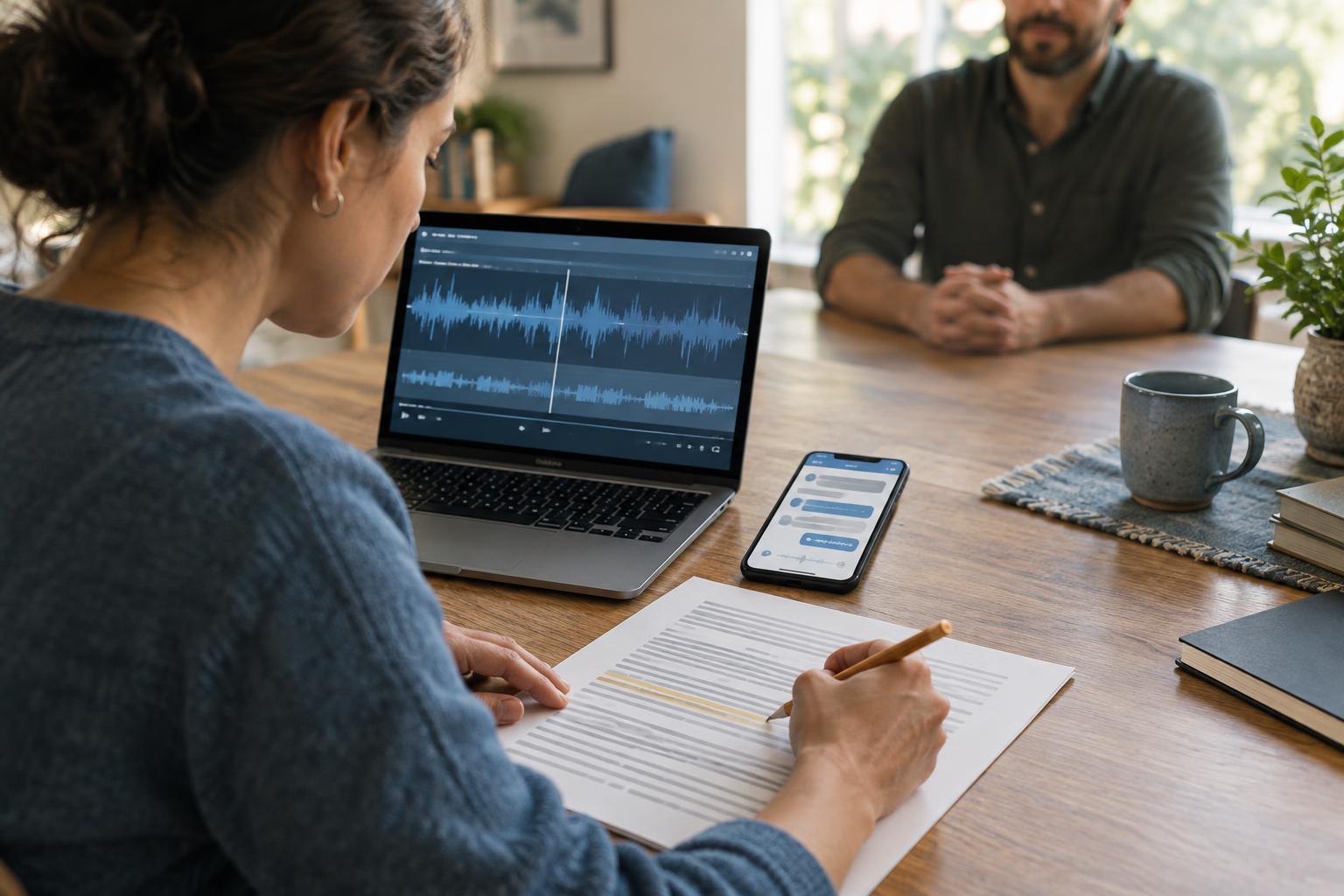
Choose the right way to present someone’s words
A direct quotation tells the audience that these are the words a person used. Use one when you have a reliable record, such as a recording, a message you can review or notes that clearly capture the wording. If you remember the point of a conversation but not its exact phrasing, paraphrase it instead. “She said the update confused her” is a different claim from “She said, ‘This update makes no sense.’”
Dialogue is especially tempting when a story needs a lively opening. Resist filling in a conversation just to make the scene flow. You can describe what happened without inventing lines: “Several people asked why the post had changed” gives readers a clear picture without pretending to reproduce their words. If you write fictional or illustrative dialogue, label it as an example so it cannot be mistaken for an exchange that occurred.
Keep the meaning attached to the quote
A sentence can be word-for-word accurate and still mislead when separated from its context. Before selecting a short quote, read the surrounding exchange. Was the speaker joking, repeating someone else’s claim or responding to a specific question? A line that looks like a firm opinion in a screenshot may have been a hypothetical, a correction or part of a longer disagreement.
Introduce a quote with enough context to explain who is speaking and what they are addressing. Then let the quote do a specific job: reveal a perspective, clarify a decision or show how someone expressed an idea. Avoid using a dramatic fragment as decoration when a plain paraphrase would tell the story more fairly. If two people use the same word differently, explain that difference rather than forcing their comments into a tidy conflict.
Edit for clarity without quietly changing the record
Digital formats reward brevity, so quotations often need trimming. Remove material that is irrelevant, but check that the shortened version still carries the speaker’s intended meaning. An ellipsis can signal omitted words within a quote; it should not bridge separate thoughts to create a statement the person never made. If a small clarification is necessary, make it visibly yours, for example by placing an explanatory word in brackets.
Spoken conversation contains pauses, restarts and unfinished sentences. You do not need to reproduce every hesitation, but polishing a speaker’s grammar can change their voice or make them sound more certain than they were. Choose a consistent, light approach to cleanup. When the precise wording matters—such as in a dispute about what someone promised—preserve it rather than smoothing it over.
Treat messages, screenshots and captions as context-rich material
A chat message may be easy to copy, yet difficult to interpret outside its thread. Check what came before and after it, who could see it and whether the conversation was public or private. Being able to access a message does not automatically make it appropriate to publish. Consider asking permission or paraphrasing when an exact quote would expose personal details, bystanders or a conversation shared with a limited group.
Screenshots and short video clips can appear more complete than they are. If you use one, make sure the accompanying text does not imply that the visible portion is the whole exchange. For video, compare captions with the audio before publishing; automatic transcription can mishear names, punctuation and tone. If an image is central to the story, describe its relevant content in text so readers do not have to rely on the image alone.
Make a final accuracy pass from the audience’s point of view
Before publishing, review every set of quotation marks and ask: Can I verify these exact words? Is the speaker clearly identified? Would the person recognize the meaning conveyed by this excerpt? Check whether a paraphrase has slipped into quotation marks or an illustrative line could be read as a real one. This pass is useful for a long feature, a short caption and a creator’s script alike.
Finally, read the story without the notes and source material in front of you. A new reader only has what you provide. If they need missing context to understand a quote fairly, add it. Accurate dialogue does more than avoid mistakes: it helps people hear distinct voices without asking those voices to carry a story they did not tell.