Start with the claim, not the person
An impressive introduction can make almost any statement sound authoritative. But credentials only help you judge a claim when they are relevant to it. Before looking up a speaker’s biography, put the claim into a sentence of your own. Is the person explaining how something works, interpreting evidence, predicting what will happen or recommending what others should do? Those tasks can call for different kinds of knowledge.
For example, someone who designs social media interfaces may be well placed to explain a feature’s intended behavior. That experience does not automatically make them an authority on its effects on mental health or on how every community uses it. Likewise, a scholar who studies online communities may offer a valuable interpretation of a trend without having inside knowledge of a platform’s private decisions. The useful question is not simply “Is this person an expert?” It is “An expert in which part of this claim?”
Match the credential to the task
Look for training, sustained work or direct experience that connects closely to the subject. A degree can show formal study, but its field matters. A job title may show practical experience, but an employer’s name alone does not tell you which projects someone worked on. A person can also develop meaningful expertise outside formal institutions through documented work, careful reporting or long-term participation in a community.
Pay attention to the boundaries of that experience. A creator who has repeatedly tested video formats may have useful advice about making videos for their own audience. Their results may not transfer neatly to a different audience, platform or budget. A researcher whose work concerns one age group or setting may have less to say about another. Relevant credentials increase the reason to listen; they do not turn every conclusion into a universal rule.
Check what you can verify
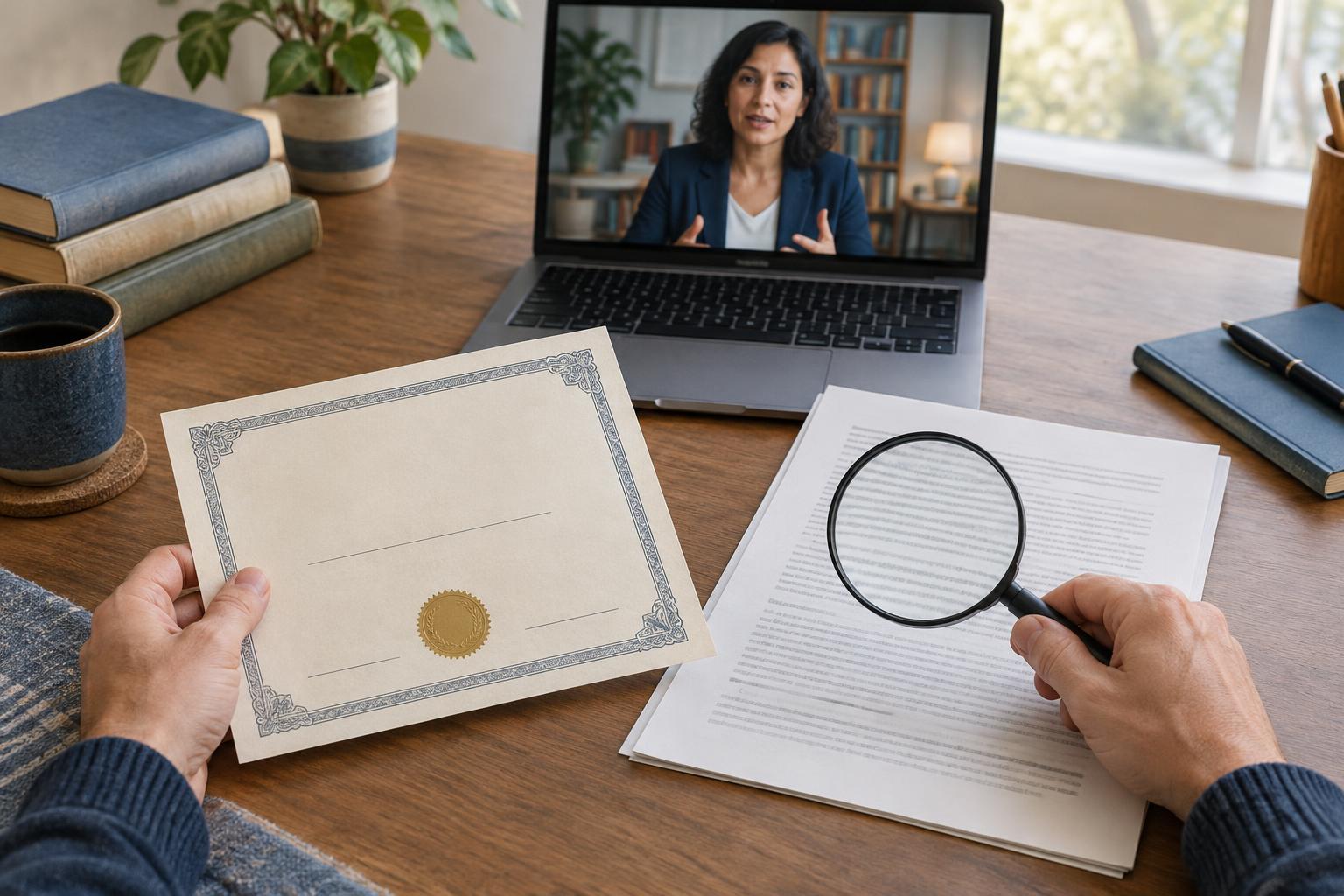
When a credential is central to a claim, look for a straightforward way to confirm it. An institutional profile, a public record of published work or a portfolio of relevant projects can help establish what a person has actually done. Read the description rather than relying on a headline: “worked at a platform” could cover many roles, and “published research” could refer to work on a different topic.
Also notice what remains unclear. A social profile might list an affiliation without saying whether it is current. A short video might omit the methods behind a confident conclusion. Missing detail does not prove dishonesty; short formats leave things out. It does mean you should avoid filling the gaps yourself. If a claim matters to a decision you are making, seek the fuller explanation or compare it with other qualified perspectives.
Separate expertise from evidence
Even a well-matched expert should be able to explain why a specific claim follows. Are they describing something they observed firsthand, summarizing a body of work, offering an interpretation or making a guess? Clear communicators often signal those differences. Watch for a leap from a narrow observation to a broad conclusion, such as treating one creator’s experience as proof of how an entire platform works.
Consider incentives as well. Someone may have a product to sell, a client to promote or a strong public position to defend. That does not make their knowledge worthless, but it gives you a reason to examine how they present alternatives and uncertainty. The same care applies when a person’s views align with your own: agreement can make a thin explanation feel stronger than it is.
Make a proportionate judgment
You do not need to investigate every passing comment. For a low-stakes tip, it may be enough to see whether the speaker has relevant experience and whether the advice makes sense in your situation. For a consequential claim, spend more time checking the credential, the supporting reasoning and whether other people with relevant expertise reach similar conclusions.
A useful final test is to ask what, precisely, the credential supports. You might conclude, “This person knows how this tool is built, but their prediction about how people will use it is less certain.” That is a more useful judgment than labeling someone wholly credible or wholly untrustworthy. Media literacy is often the practice of assigning the right amount of confidence to the right part of a claim.