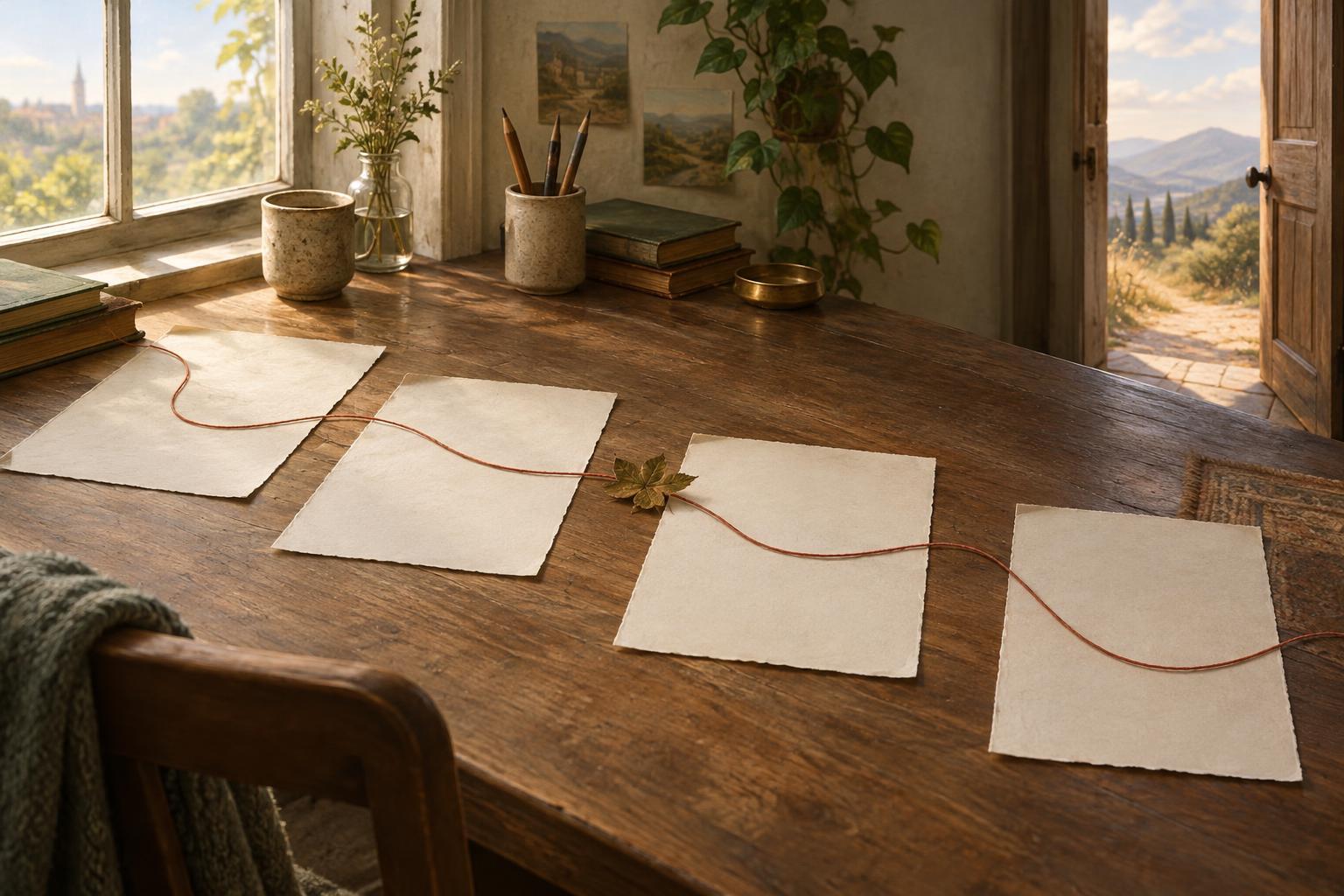
What a motif does
A motif is an element that returns throughout a story: an object, image, phrase, sound, gesture or kind of situation. A character might keep finding handwritten notes. A video essay might return to the sound of a notification. A series of posts might open with the same question. The repetition gives the audience something to recognize, even as the people and circumstances change.
Recognition is only part of the job. A useful motif also makes connections. If the first handwritten note feels like an invitation and the last feels like a warning, the repeated object helps show what has changed. The story does not need to stop and explain that shift. The audience can notice it through the different contexts in which the note appears.
Choose something that belongs in the story
Start with the story’s central tension, then look for an element that could appear naturally in several parts of it. In a story about someone learning to trust a collaborator, an unfinished shared document might work better than an unrelated symbolic object. It can appear while they disagree, while one person makes room for the other’s ideas, and again when they finally publish something together.
Keep the motif simple enough to identify but flexible enough to change. A precise phrase can be memorable, yet repeating it word for word every time may feel forced. A broader motif, such as an unanswered question, gives you more ways to use it. You can also choose an ordinary detail rather than an obvious symbol. Its meaning can build gradually through the decisions characters make around it.
Let each return add something
Before placing a motif in another scene or post, ask what is different this time. Has the person using it changed? Does the audience know something new? Is the setting making a familiar detail feel strange? If every appearance makes the same point, repetition may become a reminder rather than a development. A return is more rewarding when it invites the audience to revise an earlier impression.
Imagine a short creator series about making a meal with a relative’s recipe. In the first episode, a stained recipe card is treated as a set of instructions. Later, the creator notices a crossed-out ingredient and asks why it changed. Near the end, they add a note of their own. The card connects the episodes, but its role moves from guide to question to record of a continuing relationship.
Use motifs across formats without forcing a match
A recurring motif can connect a story told across a video, a caption and a longer article. It does not have to look identical in each format. A sound in a video might become a quoted phrase in a caption or the subject of a scene in writing. What matters is that the audience can understand the connection and that each appearance works in its own setting.
This is particularly helpful when people encounter the parts out of order. A recognizable element can offer a point of entry without requiring a full recap. Still, each piece should make sense on its own. Someone who sees only the third post should find a complete moment there, while someone who follows the whole series can appreciate the additional meaning carried by the motif.
Edit for balance
During revision, mark every appearance of the motif and describe its purpose in a few words. If two appearances do the same work, consider cutting one. If a major change in the story has no effect on the motif, consider whether its next return could reflect that change. This quick check can reveal both overuse and missed opportunities.
You also do not need to point out every connection. Sometimes an image or action is clear enough without a line explaining what it means. Leave room for other details, too: a motif is a thread, not the entire fabric. Used with restraint, it helps an audience feel the shape of a story while allowing each part to bring something new.